
News & Events
| [GSIS News/국제대학원 뉴스] International Academic Conference on “From Competition to Cooperation: Practical Pathways for Cooperation in Commerce, Technology and Security in Asia” /국제대학원, ‘경쟁에서 협력으로: 아시아의 통상·기술·안보 협력을 위한 실천적 방안’국제학술대회 개최 | |||||
|---|---|---|---|---|---|
| 작성자 | 관리자 | 작성일 | 2026.11.02 | 조회수 | 54 |
| 첨부파일 | 그림1.png | ||||
 GSIS
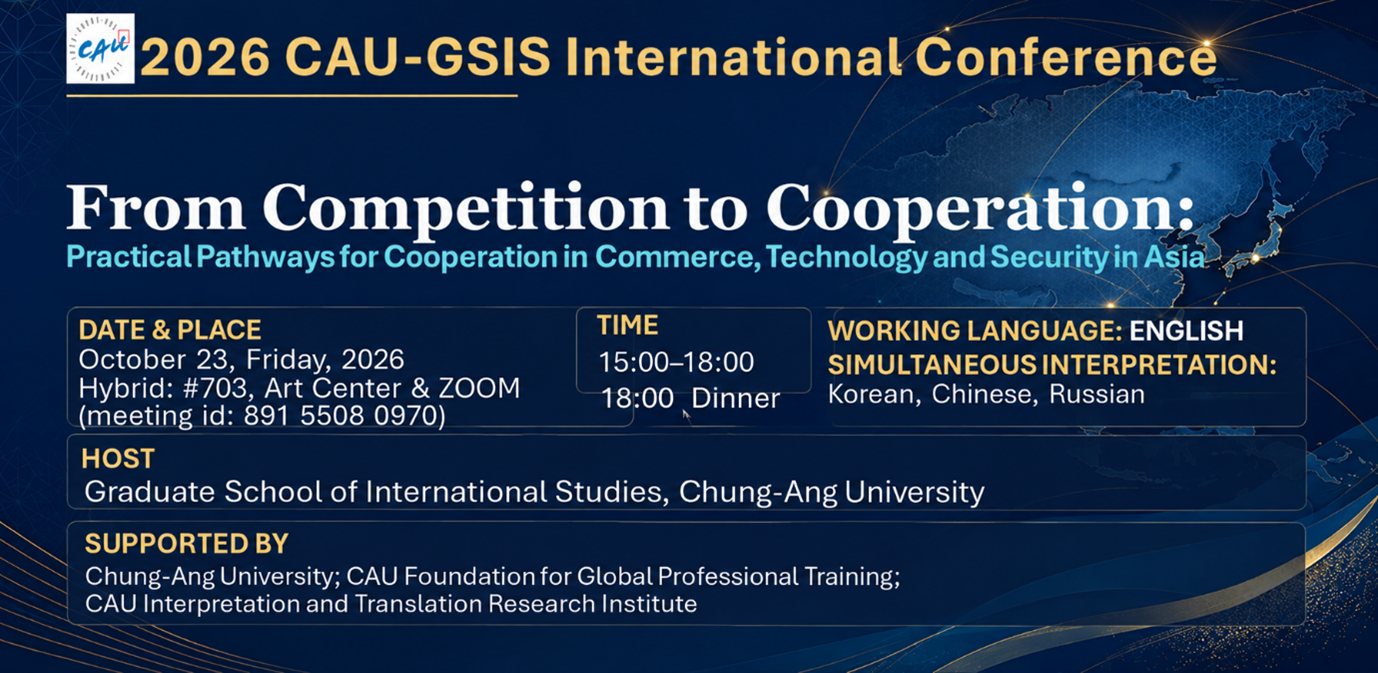
Holds International Academic Conference on “From Competition to Cooperation:
Practical Pathways for Cooperation in Commerce, Technology and Security in
Asia”
국제대학원, ‘경쟁에서 협력으로: 아시아의 통상·기술·안보 협력을 위한 실천적 방안’국제학술대회
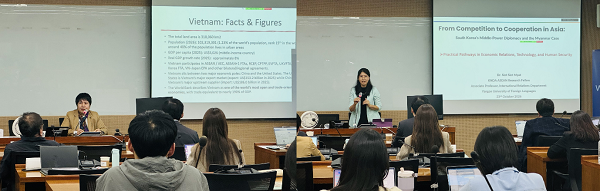
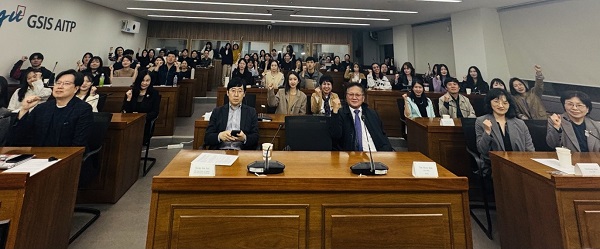
개최 On October 23rd, 2026, Chung-Ang
University's Graduate School of International Studies (GSIS) held an
international academic conference titled “From Competition to Cooperation:
Practical Pathways for Cooperation in Commerce, Technology and Security in
Asia” in Room 703 of Building 301 (CHUNG-ANG UNIVERSITY Art Center).
Approximately 70 participants, including GSIS professors, outside experts, and
students, attended the conference both online and offline where they discussed
the current state and policy directions of regional cooperation in East Asia. 중앙대학교 국제대학원은 2026년
10월 23일(금) 아트센터(301관) 703호에서 ‘경쟁에서 협력으로: 아시아의 통상·기술·안보 협력을 위한 실천적 방안(From Competition to
Cooperation: Practical Pathways for Cooperation in Commerce, Technology and
Security in Asia)’을 주제로 국제학술대회를 개최했다. 이번 학술대회에는 국제대학원
교수진과 외부 전문가, 재학생 등 약 70명이 온·오프라인으로 참석해 동아시아 지역 협력의 현황과 정책 방향 등을 논의했다.
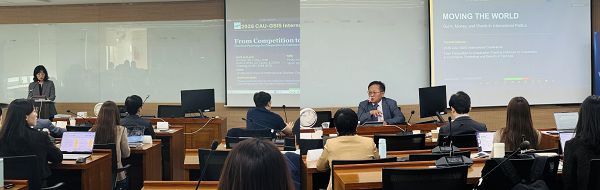
The opening ceremony was moderated by
Professor You-Kyung Byun. Prof. Taehyun Kim opened the conference by giving a
congratulatory speech. He highlighted the dual nature of human civilization,
citing the development of nuclear weapons, vulnerabilities in financial
markets, and the rise and fall of human cultures, while emphasizing that
“humanity has been able to survive and prosper because we are ‘homo-socius.’” 개회식은 변유경 교수(Prof. You-Kyung Byun)의 사회로
진행되었다. 김태현 교수(Prof. Taehyun Kim)는
축사를 통해 핵무기 개발, 금융시장의 취약성, 문화가 지닌
번영과 쇠퇴 등 인류 문명의 양면성을 짚으면서도 “인류가 생존과 번영을 이어올 수 있었던 이유는 우리가 ‘함께 살아가는 존재(homo-socius)’이기 때문”이라고 강조하며 국제학술대회의 서막을 열었다.
This was followed by Professor Seung Joo Lee’s
presentation themed “Economic Security in the Era of Trump 2.0.” First, Prof.
Lee analyzed the structural vulnerabilities of the Korean economy, including
its high dependence on international trade, concentration of trade with certain
countries such as China, and supply chain vulnerabilities. In particular, he
pointed out that Korea remains heavily dependent on imports of key materials,
components, and equipment, although Korea is a strong export-driven economy. To
address these challenges, he suggested diversifying supply chains, securing
technological sovereignty, and strengthening international cooperation as
economic security strategies. He also examined the impact of the America First
policy, simultaneous bilateralism, and asymmetric strategies on the Korean
economy. 이어 이승주 교수(Prof. Seung Joo Lee)는 ‘트럼프 2.0 시대의 경제 안보(Economic
Security in the Era of Trump 2.0)’를 주제로 발표를 진행하였다. 먼저
이 교수는 ▲높은 무역 의존도 ▲중국 등 특정 국가에 대한
교역 집중 ▲공급망 취약성 등 한국 경제의 구조적 취약점을 분석하였다.
특히 한국은 수출 강국임에도 불구하고 핵심 소재·부품·장비의
수입 의존도가 높다는 점을 지적하며 이에 대응하기 위한 경제안보 전략으로 공급망 다변화, 기술 주권
확보, 국제 협력 등을 제시하였다. 미국 우선주의, 동시 양자주의(simultaneous bilateralism), 비대칭
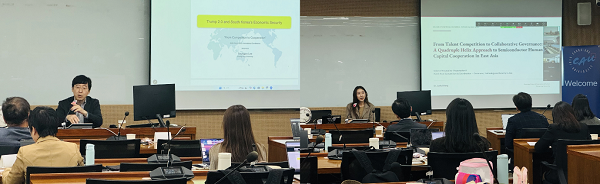
전략(asymmetrical strategy)이 한국 경제에 미치는 영향에도 주목했다. Dr. Junhui Wang delivered a presentation
titled “From Talent Competition to Collaborative Governance: A Quadruple Helix
Approach to Semiconductor Human Capital Cooperation in East Asia.” He
introduced the Quadruple Helix Model, which incorporates society and the public
into the existing government-industry-university framework, as an approach for
Korea and China to address structural challenges related to shortages of
incoming talent in the semiconductor industry. 왕준휘 박사(Dr. Junhui Wang)는 ‘인재 경쟁에서 협력적 거버넌스로: 동아시아 반도체 인재 협력을 위한
쿼드러플 헬릭스 접근법(From Talent Competition to Collaborative
Governance: A Quadruple Helix Approach to Semiconductor Human Capital
Cooperation in East Asia)’을 주제로 한국과 중국이 반도체 분야 인재 유입 부족이라는 구조적 문제를 해결하기 위한
한 가지 방법으로 기존의 정부·산업·대학 체계에 사회·공중(public) 요소를 추가한 쿼드러플 헬릭스 모델(Quadruple Helix Model)을 소개했다.
Prof. Phuong Mai Nguyen presented on “Open
Regionalism and Supply-Chain Resilience in Vietnam: Lessons from ASEAN+
Integration and Post-Pandemic Trade Restructuring.” She explained that although
Vietnam has emerged as a global manufacturing hub, its heavy reliance on
imported intermediate goods and the limited competitiveness of domestic small
and medium-sized enterprises (SMEs) have kept the country concentrated in
low-value-added segments of global value chains. She also noted that supply
chain restructuring under the China Plus One strategy could provide new
opportunities for Vietnam to upgrade its industries. 응우옌 프엉 마이 교수(Prof. Phuong Mai Nguyen)는 ‘베트남의 개방적 지역주의와 공급망 회복탄력성: 아세안 플러스(ASEAN+) 통합과 팬데믹 이후 재편된 무역 구조의 시사점(Open
Regionalism and Supply-Chain Resilience in Vietnam: Lessons from ASEAN+
Integration and Post-Pandemic Trade Restructuring)’을 주제로 발표하였다. 응우옌 교수는 베트남이 글로벌 제조 허브로 성장했으나, 해외 중간재
의존도와 국내 중소기업의 낮은 경쟁력으로 인해 글로벌 가치사슬에서 저부가가치 단계에 머물러 있다고 분석하였다. 동시에
차이나 플러스 원(China Plus One) 전략에 따른 공급망 재편이 베트남 산업 고도화에 새로운
기회가 될 수 있다고 평가하였다. Prof. Sint Sint Myat delivered a
presentation titled “Myanmar-Korea Relations: ‘Sanctions vs. Engagement is a
False Choice’.” Against the backdrop of continued political instability
following Myanmar’s military coup in 2021, she emphasized the need to strengthen
practical cooperation between Korea and Myanmar. In particular, she proposed
bilateral cooperation in several areas, including building transparent supply
chains and promoting responsible business practices in the economic sector,
expanding digital education and university exchanges in the technology sector,
and providing humanitarian assistance and strengthening disaster response
cooperation in coordination with ASEAN in the diplomatic sector. 신신먓 교수(Prof. Sint Sint Myat)는 ‘한·미얀마 관계: 제재
대 협력 이분법을 넘어(Myanmar-Korea Relations: ‘Sanctions vs.
Engagement is a False Choice’)’를 주제로 2021년 미얀마 군부
쿠데타 이후 정치적 불안정이 지속되는 상황에서 한국과 미얀마 간 실질적인 협력 관계 발전의 필요성을 강조하였다.
특히 경제 분야에서는 투명한 공급망 구축과 책임 있는 기업 활동, 기술 분야에서는 디지털
교육과 대학 간 교류 확대, 외교 분야에서는 아세안과 연계한 인도적 지원 및 재난 대응 협력을 통한
양자 협력을 제안했다.
Finally, during the panel discussion and
Q&A session moderated by Prof. Sun Eae Chun, participants shared their
ideas on economic security and international cooperation and explored ways to
promote sustainable cooperation, bringing the academic conference to a close. 끝으로, 전선애 좌장(Prof.
Sun Eae Chun)이 진행한 패널토론과 질의응답에서 참석자들은 경제안보와 국제협력에 관한 다양한 시각을 공유하고, 지속가능한 협력 방안을 모색하며 학술대회를 마무리하였다.
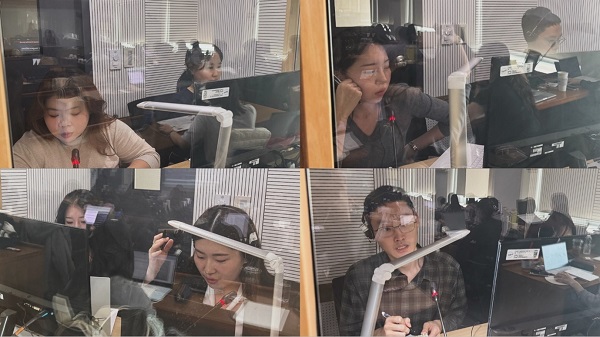
Meanwhile, students from the
Korean-English, Korean-Chinese, and Korean-Russian Programs of the Department
of Advanced Interpretation and Translation at GSIS provided simultaneous
interpretation, facilitating academic exchange throughout the event. 한편, 이번 행사에서는 국제대학원 전문통번역학과 한·영, 한·중, 한·러 전공
재학생들이 동시통역을 제공하여 원활한 학술 교류에 기여했다. Reported
by: Haran Song and Jimin Lee (Korean-English Program), Jieun Lee
(Korean-Chinese Program) 취재: 전문통번역학과
한·영 전공 송하란·이지민,
한·중 전공 이지은 |
|||||
GSIS office, Building 303, Room 708, GSIS, 84 HEUKSEOK-RO, DONGJAK-GU, SEOUL, 06974, KOREA
Tel : 02-820-5623, 5624, 6477 Fax : 02-827-0155 E-mail : gsis@cau.ac.kr
Copyrightⓒ Graduate School of International Studies, Chung Ang University. All rights reserved.
Tel : 02-820-5623, 5624, 6477 Fax : 02-827-0155 E-mail : gsis@cau.ac.kr
Copyrightⓒ Graduate School of International Studies, Chung Ang University. All rights reserved.